You've been a year of
contemplation and reevaluation
new experiences, welcomed or otherwise
a few not-quites and maybe-laters
letting-go and hanging on, and waiting to see the wisdom of each
surprising new undertakings
growth and stumbles and more growth
unexpected joys.
Thanks.
Now send in 2012, will you?
Saturday, December 31, 2011


Sunday, December 4, 2011
Well, I never
Apologies to Vicki Rocho: I signed up to participate in her blogfest, which took place last week, not foreseeing that I'd be off blogosphere during that time. But here I am,ready to share a list of the things that begins with "I never."
I never had the desire to:
I never thought I would:
I never had the desire to:
- smoke
- go bungee-jumping
- run for political office
- ride in a helicopter
- dye my hair blonde
- gamble in a casino
- travel to outer space

I never thought I would:
- earn a black belt in martial arts
- ride in a Porsche (thanks to my friend, Janet, who gave me a ride to my 40th birthday celebration)
- sing in Carnegie Hall, not once, but twice (the perks of attending a graduate school known for its choirs, which are often called upon to perform in New York City with different orchestras.)

- see friends from primary and secondary school semi-regularly
- be in a group so loud that the hotel manager called repeatedly to the room to inform us of complaints from other guests (I was with the kidlit writers at a writers' conference)

Monday, November 14, 2011
Pondering confidence
Confidence is a strange thing, isn't it? What exactly is it? Is it a belief in oneself? Is that belief a general one or is it tied to a specific ability? Does it change from day to day? Does it impact the outcome of any given event? If so, how directly and how much? Is confidence something you're born with, like the range of your voice? Or is it dependent on your upbringing? How is confidence different from arrogance? Are they the same thing except on different places in a continuum? Or are they different animals altogether? Is confidence necessary for success? When confidence is not commensurate with ability, does that confidence in fact catapult the person into a higher level of success? Is a person with ability but no confidence doomed to mediocrity? Is this kitty delusional? Or is this what confidence looks like?
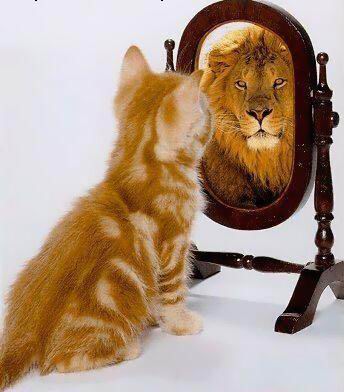
Does a truly confident person ever think much about his confidence level? Does the fact that I ponder and analyze it so much say anything about my confidence?
Edited to add: And does the fact that I accidentally wrote "commiserate" instead of "commensurate" say anything at all? Sheesh.
Wednesday, November 9, 2011
Oh Captain Hook, how you taunt me!
How's that for a catchy title?
No, my post has nothing to do with Peter Pan and evil pirates with hooks as hands. I am talking about that wretched hook at the beginning of the book without which nobody will want to read on.
Am I being facetious? Why, yes.
To an extent I agree with the general idea of a hook. What I rebel against is how it seems to have taken on a life of its own in the writing circles, not unlike query-writing. Agents and other gatekeepers are now lamenting that often the manuscripts fall short of the standard set up by the very polished queries.
This isn't the first instance I am dissenting under the yoke of the hook --in my nook of books. (Sorry, being rebellious and frustrated brings out the groaniest of jokes from me.) So why am I ranting right now?

Because I am considering yet another idea about the structure of my YA novel. My original scaffolding had the prologue (oh wait, prologues are no-nos. So I'll just call it the first chapter) showing the inciting incidents. I would introduce my two protagonists (wait again; multiple POV characters are frowned upon) at the moment their lives are changed by the deaths of a loved one. Over the course of the book, we see how the girls deal with their grief, their scenes interspersed with short, flashback chapters (speaking of no-nos...) that show the relationships between each girl and the loved one.
The other night while mulling over a different problem of the novel, an idea occurred to me: that I shouldn't start with the deaths but I should just show these two girls having difficulty navigating their lives. That way, I set up a question, a mystery of sorts: why are the girls acting and thinking this way? I'll keep the flashback chapters to show the relationships. It's only in the middle of the book, after readers have come to know those loved ones that I reveal their deaths. Hopefully the mourning and grief my protagonists feel will be shared by the readers who have come to know them.
But who wants to read a book that starts with two girls starting a school year pretending everything is fine?
Where's the hook?
No, my post has nothing to do with Peter Pan and evil pirates with hooks as hands. I am talking about that wretched hook at the beginning of the book without which nobody will want to read on.
Am I being facetious? Why, yes.
To an extent I agree with the general idea of a hook. What I rebel against is how it seems to have taken on a life of its own in the writing circles, not unlike query-writing. Agents and other gatekeepers are now lamenting that often the manuscripts fall short of the standard set up by the very polished queries.
This isn't the first instance I am dissenting under the yoke of the hook --in my nook of books. (Sorry, being rebellious and frustrated brings out the groaniest of jokes from me.) So why am I ranting right now?
Because I am considering yet another idea about the structure of my YA novel. My original scaffolding had the prologue (oh wait, prologues are no-nos. So I'll just call it the first chapter) showing the inciting incidents. I would introduce my two protagonists (wait again; multiple POV characters are frowned upon) at the moment their lives are changed by the deaths of a loved one. Over the course of the book, we see how the girls deal with their grief, their scenes interspersed with short, flashback chapters (speaking of no-nos...) that show the relationships between each girl and the loved one.
The other night while mulling over a different problem of the novel, an idea occurred to me: that I shouldn't start with the deaths but I should just show these two girls having difficulty navigating their lives. That way, I set up a question, a mystery of sorts: why are the girls acting and thinking this way? I'll keep the flashback chapters to show the relationships. It's only in the middle of the book, after readers have come to know those loved ones that I reveal their deaths. Hopefully the mourning and grief my protagonists feel will be shared by the readers who have come to know them.
But who wants to read a book that starts with two girls starting a school year pretending everything is fine?
Where's the hook?
Friday, November 4, 2011
What if they'd been all air balls
Have you seen the video that has been making the rounds on Facebook this week, about the young basketball player with autism? Like most people, I was moved to tears, cheering for Jason, the young man, and rejoicing with the people around him.
But while it encouraged and filled me with optimism, I also ached for all those other people who have the same difficulties in life but who don't have a coach caring enough to make him team manager or insightful enough to let him take the court; who don't have parents who make it possible for him to be part of the team; who don't have teammates trusting enough to hand him the ball for his three-pointers; or who may have all of those but miss all his shots.

What then? The video, if there were even one, wouldn't go viral on Facebook. They would get a few hundred less "way to go"s. They don't get to feel the high that comes from such an incredible event.
Hopefully this makes me a bit more aware of people around me struggling, not just with autism. In my circle, it's with the kids who don't understand boundaries, those who feel defeated by every small setbacks. It's the adults with chips on their shoulders carved so deep they can't even notice it, those who are simply worn out by demands on their strength and emotions.
But while it encouraged and filled me with optimism, I also ached for all those other people who have the same difficulties in life but who don't have a coach caring enough to make him team manager or insightful enough to let him take the court; who don't have parents who make it possible for him to be part of the team; who don't have teammates trusting enough to hand him the ball for his three-pointers; or who may have all of those but miss all his shots.

What then? The video, if there were even one, wouldn't go viral on Facebook. They would get a few hundred less "way to go"s. They don't get to feel the high that comes from such an incredible event.
Hopefully this makes me a bit more aware of people around me struggling, not just with autism. In my circle, it's with the kids who don't understand boundaries, those who feel defeated by every small setbacks. It's the adults with chips on their shoulders carved so deep they can't even notice it, those who are simply worn out by demands on their strength and emotions.
Tuesday, November 1, 2011
Time to enjoy confrontations
My two protagonists are about to have a big fight in my YA novel, and I am having enormous trouble writing the scene. All I want is to be as far away from the situation as possible. A lifelong inclination and practice in avoiding confrontation will do that to a person.

Maybe I should just think about the plot and where it needs to go and then steer the fight toward that end in a detached way. Maybe I can even pretend to be someone who welcomes such a challenge (I know such people exist; they just may as well be aliens to me.)
Or maybe, working through the emotions and the thought processes involved in a confrontation can reveal insights and new understanding in ways I won't even anticipate.

Maybe I should just think about the plot and where it needs to go and then steer the fight toward that end in a detached way. Maybe I can even pretend to be someone who welcomes such a challenge (I know such people exist; they just may as well be aliens to me.)
Or maybe, working through the emotions and the thought processes involved in a confrontation can reveal insights and new understanding in ways I won't even anticipate.
Wednesday, October 26, 2011
October Blogfest
Today I am participating in Bish Denham's blogfest to celebrate 4 years of blogging and 300 followers. Yay, Bish!
I will write a 300-word story that has to do with Halloween, trying to incorporate the numbers "4" and "300" in it.
Imagine a mysterious bass voice speaking the following:
This. Is a True Story. It happened one cold and dark night in a small town in Colorado.
The people around the fireplace in the house on this December evening look like any other holiday revelers, munching on cheese and crackers, sipping cider. But soon the lamps are turned off, leaving the fire the only light source. Plates and glasses are put away, replaced by sheets of paper. The real reason for the gathering is about to begin. And it's not to discuss how consumerism has killed the holiday spirit. No. These are writers. Writers don't idly complain. They take action.
Tonight, the action is to reenact a tradition that celebrates the season with meaning. Tonight, they gather to share ghost stories.
Charles Dickens would feel right at home as one writer after another reads stories about dark forests and empty graves and mysterious fumes in hushed tones. The temperature drops lower with each story. The computer programmer zips up his jacket. The librarian wraps her cardigan tightly around her. The two golden retrievers, who have been happily licking faces and wagging their tails, are now trying to squeeze in among the people. The shadows thrown by the fire take on more recognizable shapes: a sickle here, a werewolf there.
The fourth writer starts on her story; it's one that her Norwegian grandparents have assured her to be true. She has everyone hanging on every word, breathing with every cadence.
"Janus heads to the wharf, where a light shines intermittently. His heart beats in his ears, drowning out the low moan that emits from the dilapidated boat. This is it. Finally, he gets to face down his darkest fear. Only a few more steps, and then--"
CRASH!!!!!
Everyone in the room jumps. A few shriek. The host runs to the kitchen and finds that the glass from the hurricane lamp on the kitchen counter has shattered into a hundred shiny pieces, reflecting the light from the candle.

The lamp has been a gift from her daughter, who bought it in an antique store in Norway the previous summer.
I will write a 300-word story that has to do with Halloween, trying to incorporate the numbers "4" and "300" in it.
Imagine a mysterious bass voice speaking the following:
This. Is a True Story. It happened one cold and dark night in a small town in Colorado.
The people around the fireplace in the house on this December evening look like any other holiday revelers, munching on cheese and crackers, sipping cider. But soon the lamps are turned off, leaving the fire the only light source. Plates and glasses are put away, replaced by sheets of paper. The real reason for the gathering is about to begin. And it's not to discuss how consumerism has killed the holiday spirit. No. These are writers. Writers don't idly complain. They take action.
Tonight, the action is to reenact a tradition that celebrates the season with meaning. Tonight, they gather to share ghost stories.
Charles Dickens would feel right at home as one writer after another reads stories about dark forests and empty graves and mysterious fumes in hushed tones. The temperature drops lower with each story. The computer programmer zips up his jacket. The librarian wraps her cardigan tightly around her. The two golden retrievers, who have been happily licking faces and wagging their tails, are now trying to squeeze in among the people. The shadows thrown by the fire take on more recognizable shapes: a sickle here, a werewolf there.
The fourth writer starts on her story; it's one that her Norwegian grandparents have assured her to be true. She has everyone hanging on every word, breathing with every cadence.
"Janus heads to the wharf, where a light shines intermittently. His heart beats in his ears, drowning out the low moan that emits from the dilapidated boat. This is it. Finally, he gets to face down his darkest fear. Only a few more steps, and then--"
CRASH!!!!!
Everyone in the room jumps. A few shriek. The host runs to the kitchen and finds that the glass from the hurricane lamp on the kitchen counter has shattered into a hundred shiny pieces, reflecting the light from the candle.

broken glass by ~zeh235
The lamp has been a gift from her daughter, who bought it in an antique store in Norway the previous summer.
Thursday, October 13, 2011
Goon Squads, Book People, and Forgotten Gardens
With thousands of titles currently available, finding a great read seems like such a gamble sometimes but recently I hit the jack-pot with three fabulous books.
 It was many months after I bought the book that I finally read it. Pulitzer Prize winners have been good to me and I was afraid the heightened expectations would mar my reading experience. And when I found out the structure of the book was non-standard--one of the linked stories was told entirely in power point slides--my anti-gimmick-o-meter lit up and made me even more hesitant.
Which just goes to show how external things--covers, synopses, structure, and reviews and, yes, even awards--can fail to show what a book really is. All these worries were unnecessary. The book is like an elegant 3D puzzle. It takes an extremely creative and logical mind as well as authority to pull it off.
I am not sure how a novel without a central protagonist (there are several recurring characters) or a real plot can evoke so much empathy and intrigue. I am not even sure I'd know how to analyze the book to find the secret ingredients, so I'll just recommend that you read it.
I am not sure how a novel without a central protagonist (there are several recurring characters) or a real plot can evoke so much empathy and intrigue. I am not even sure I'd know how to analyze the book to find the secret ingredients, so I'll just recommend that you read it.
 People of the Book by Geraldine Brooks
 I had been meaning to read Geraldine Brooks for a while. After browsing excerpts from several of her books at the bookstore, I took this one home. The premise of the story is simple: a book-restorer tries to uncover the mystery of an ancient treasure.
We travel to different times and places to where this book had been. The historical and cultural aspects are so richly described that they jump to life. Reading about them made me feel at once aware of my ignorance and hungry for more knowledge.
The book is much more than a history and social studies book, of course. The characters, some of whom appear for only a short time, feel authentic, with palpable struggles and hopes. For me to be able to go along on their journeys, to be privy to how they make moral decisions, difficult and life-changing, was what kept my mind going back to the book long after I"d finished it.

When I started the book, the constant moving of the story from one protagonist to the next and one time period to the next pulled me out but I was willing to put up with the intrusion because the writing was engaging I was also very much aware of some of the devices the author had used to enhance the story: repeated themes--losing a child; children being taken and plopped down in foreign environments--and characters with evocative names: the evil landlord named Swindell and the rat-catcher named Rodin.
At some point, however, I realized I no longer paid attention to those things. All I wanted to do was to finish off whatever I was doing: cooking, talking on the phone, chauffeuring children, so that I could get back to the book. It recaptured for me the delights of my childhood reading experiences. It reminded me what a otherworldly joy reading can bring. The book may contain stock characters or cliched phrases, but I didn't notice, nor did I care. My writer-self was convinced early in the book to stay out of the way and just let my reader-self have at it. Smart self, that one.
Read any books lately that have given you the goose bumps or made you laugh or brought your nostalgia?
Subscribe to:
Posts (Atom)