
Wednesday, January 25, 2012


Wednesday, January 11, 2012
Strength of conviction
Last year in November, my writing group decided to do our own version of the popular NaNoWriMo. Every one of us was in the middle of a novel and we decided we would use November and December to push for the end.
The experiment was an interesting one for me. (I was forbidden to say I failed. Don't hit me. T.)
You see, I'd never done NaNoWriMo before, and have always been a slow writer who edits (obsessively) as I go. During those two months, I did have a few days when I just wrote without worrying about how well I was writing or how the current chapter fitted in the entire novel. Those days were awesome, awesome, awesome.
Then there were those (many) other days that found me stalled and hesitant and semi-paralyzed or just plain busy. (Yes, we decided afterwards that it was silly to try this during the most holiday-heavy time of the year.)
Now it's a new year and new years tend to fill me with hope again. Call me naive. So here I am, resuming my intention for my novel, which is to move forward so that I have a finished draft to slash, I mean rework.
And I'm finding that it's just as hard in January as it has been in November and December.
Just when I am fidgeting and the butt glue is coming loose, I get an email from my writing friend. And it's about how we need to give up grandiose ideas about ourselves and our writing, and then we can write what we need to write.
I have grandiose and less grandiose ideas about my writing. I have doubts and fears. I have a repertoire of craft principles gleaned from writing professionals. I have the lasting impressions and memories of millions of sentences that have passed through my mind.
But none of it, whether it is a wish to touch someone with my book or a fear that it will not be good enough for anyone or the recognition of brilliant sentence or an assurance I have portrayed a character honestly, is helpful at this writing stage.
What I need is to clear my head of anything extraneous to the story I'm writing.
Easier said than done, obviously, but an excellent reminder for when I'm lamenting my cliche-heavy prose and confusing dialogues and wooden characters and meaningless plot twists and the over-abundance of interiority.
To just keep writing. Humbly and with great conviction that it needs to be written.
Wednesday, January 4, 2012
Saturday, December 31, 2011
Well, 2011
You've been a year of
contemplation and reevaluation
new experiences, welcomed or otherwise
a few not-quites and maybe-laters
letting-go and hanging on, and waiting to see the wisdom of each
surprising new undertakings
growth and stumbles and more growth
unexpected joys.
Thanks.
Now send in 2012, will you?
contemplation and reevaluation
new experiences, welcomed or otherwise
a few not-quites and maybe-laters
letting-go and hanging on, and waiting to see the wisdom of each
surprising new undertakings
growth and stumbles and more growth
unexpected joys.
Thanks.
Now send in 2012, will you?
Sunday, December 4, 2011
Well, I never
Apologies to Vicki Rocho: I signed up to participate in her blogfest, which took place last week, not foreseeing that I'd be off blogosphere during that time. But here I am,ready to share a list of the things that begins with "I never."
I never had the desire to:
I never thought I would:
I never had the desire to:
- smoke
- go bungee-jumping
- run for political office
- ride in a helicopter
- dye my hair blonde
- gamble in a casino
- travel to outer space

I never thought I would:
- earn a black belt in martial arts
- ride in a Porsche (thanks to my friend, Janet, who gave me a ride to my 40th birthday celebration)
- sing in Carnegie Hall, not once, but twice (the perks of attending a graduate school known for its choirs, which are often called upon to perform in New York City with different orchestras.)

- see friends from primary and secondary school semi-regularly
- be in a group so loud that the hotel manager called repeatedly to the room to inform us of complaints from other guests (I was with the kidlit writers at a writers' conference)

Monday, November 14, 2011
Pondering confidence
Confidence is a strange thing, isn't it? What exactly is it? Is it a belief in oneself? Is that belief a general one or is it tied to a specific ability? Does it change from day to day? Does it impact the outcome of any given event? If so, how directly and how much? Is confidence something you're born with, like the range of your voice? Or is it dependent on your upbringing? How is confidence different from arrogance? Are they the same thing except on different places in a continuum? Or are they different animals altogether? Is confidence necessary for success? When confidence is not commensurate with ability, does that confidence in fact catapult the person into a higher level of success? Is a person with ability but no confidence doomed to mediocrity? Is this kitty delusional? Or is this what confidence looks like?
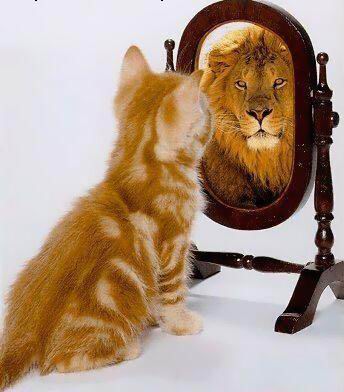
Does a truly confident person ever think much about his confidence level? Does the fact that I ponder and analyze it so much say anything about my confidence?
Edited to add: And does the fact that I accidentally wrote "commiserate" instead of "commensurate" say anything at all? Sheesh.
Wednesday, November 9, 2011
Oh Captain Hook, how you taunt me!
How's that for a catchy title?
No, my post has nothing to do with Peter Pan and evil pirates with hooks as hands. I am talking about that wretched hook at the beginning of the book without which nobody will want to read on.
Am I being facetious? Why, yes.
To an extent I agree with the general idea of a hook. What I rebel against is how it seems to have taken on a life of its own in the writing circles, not unlike query-writing. Agents and other gatekeepers are now lamenting that often the manuscripts fall short of the standard set up by the very polished queries.
This isn't the first instance I am dissenting under the yoke of the hook --in my nook of books. (Sorry, being rebellious and frustrated brings out the groaniest of jokes from me.) So why am I ranting right now?

Because I am considering yet another idea about the structure of my YA novel. My original scaffolding had the prologue (oh wait, prologues are no-nos. So I'll just call it the first chapter) showing the inciting incidents. I would introduce my two protagonists (wait again; multiple POV characters are frowned upon) at the moment their lives are changed by the deaths of a loved one. Over the course of the book, we see how the girls deal with their grief, their scenes interspersed with short, flashback chapters (speaking of no-nos...) that show the relationships between each girl and the loved one.
The other night while mulling over a different problem of the novel, an idea occurred to me: that I shouldn't start with the deaths but I should just show these two girls having difficulty navigating their lives. That way, I set up a question, a mystery of sorts: why are the girls acting and thinking this way? I'll keep the flashback chapters to show the relationships. It's only in the middle of the book, after readers have come to know those loved ones that I reveal their deaths. Hopefully the mourning and grief my protagonists feel will be shared by the readers who have come to know them.
But who wants to read a book that starts with two girls starting a school year pretending everything is fine?
Where's the hook?
No, my post has nothing to do with Peter Pan and evil pirates with hooks as hands. I am talking about that wretched hook at the beginning of the book without which nobody will want to read on.
Am I being facetious? Why, yes.
To an extent I agree with the general idea of a hook. What I rebel against is how it seems to have taken on a life of its own in the writing circles, not unlike query-writing. Agents and other gatekeepers are now lamenting that often the manuscripts fall short of the standard set up by the very polished queries.
This isn't the first instance I am dissenting under the yoke of the hook --in my nook of books. (Sorry, being rebellious and frustrated brings out the groaniest of jokes from me.) So why am I ranting right now?
Because I am considering yet another idea about the structure of my YA novel. My original scaffolding had the prologue (oh wait, prologues are no-nos. So I'll just call it the first chapter) showing the inciting incidents. I would introduce my two protagonists (wait again; multiple POV characters are frowned upon) at the moment their lives are changed by the deaths of a loved one. Over the course of the book, we see how the girls deal with their grief, their scenes interspersed with short, flashback chapters (speaking of no-nos...) that show the relationships between each girl and the loved one.
The other night while mulling over a different problem of the novel, an idea occurred to me: that I shouldn't start with the deaths but I should just show these two girls having difficulty navigating their lives. That way, I set up a question, a mystery of sorts: why are the girls acting and thinking this way? I'll keep the flashback chapters to show the relationships. It's only in the middle of the book, after readers have come to know those loved ones that I reveal their deaths. Hopefully the mourning and grief my protagonists feel will be shared by the readers who have come to know them.
But who wants to read a book that starts with two girls starting a school year pretending everything is fine?
Where's the hook?
Friday, November 4, 2011
What if they'd been all air balls
Have you seen the video that has been making the rounds on Facebook this week, about the young basketball player with autism? Like most people, I was moved to tears, cheering for Jason, the young man, and rejoicing with the people around him.
But while it encouraged and filled me with optimism, I also ached for all those other people who have the same difficulties in life but who don't have a coach caring enough to make him team manager or insightful enough to let him take the court; who don't have parents who make it possible for him to be part of the team; who don't have teammates trusting enough to hand him the ball for his three-pointers; or who may have all of those but miss all his shots.

What then? The video, if there were even one, wouldn't go viral on Facebook. They would get a few hundred less "way to go"s. They don't get to feel the high that comes from such an incredible event.
Hopefully this makes me a bit more aware of people around me struggling, not just with autism. In my circle, it's with the kids who don't understand boundaries, those who feel defeated by every small setbacks. It's the adults with chips on their shoulders carved so deep they can't even notice it, those who are simply worn out by demands on their strength and emotions.
Subscribe to:
Posts (Atom)